
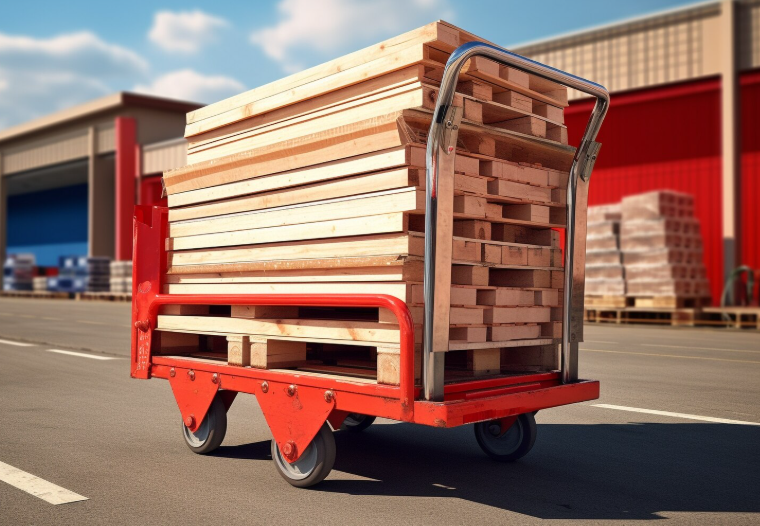
Warehouses and factories are fast-paced environments where efficiency and safety directly impact productivity. Moving materials, tools, and products from one area to another is part of daily operations. Without the right equipment, this constant movement can slow down workflows and increase the risk of injury. This is why industrial trolleys are considered essential equipment in many commercial and industrial settings.
Designed for strength and durability, industrial trolleys help businesses handle heavy loads with greater control and less physical strain. They are not simply transport tools. They are practical solutions that support smoother operations across multiple industries.
The Role of Industrial Trolleys in Material Handling
Material handling is a critical part of warehouse and factory management. Goods arrive, are sorted, stored, assembled, and dispatched. Each stage requires movement.
Industrial trolleys bridge the gap between manual labour and full automation. While conveyor systems and forklifts handle large-scale movement, trolleys provide flexibility for smaller loads or tighter spaces. Workers can transport tools, boxes, machinery parts, and supplies quickly without waiting for larger equipment.
This adaptability makes them an integral part of the daily workflow.
Improving Workplace Safety
Manual lifting remains one of the most common causes of workplace injuries. Carrying heavy items across long distances can lead to back strain, muscle fatigue, and accidents.
Industrial trolleys reduce the need for repeated lifting by allowing loads to be placed securely on a wheeled platform. Workers can then push or pull items with significantly less effort.
By minimising physical strain, businesses improve occupational health and safety standards. Fewer injuries mean reduced downtime and lower compensation costs, which benefits both employees and employers.
Enhancing Productivity and Efficiency
Time efficiency is crucial in warehouse and factory operations. Delays in moving materials from one station to another can disrupt production schedules.
Industrial trolleys enable faster transportation of goods between departments. Instead of making multiple trips carrying smaller loads, workers can move larger quantities in one go.
In assembly lines, tool trolleys ensure that necessary equipment is always within reach. In despatch areas, stock trolleys simplify the process of organising and preparing orders for shipment.
By reducing unnecessary movement and wait times, overall productivity increases.
Different Types for Different Needs
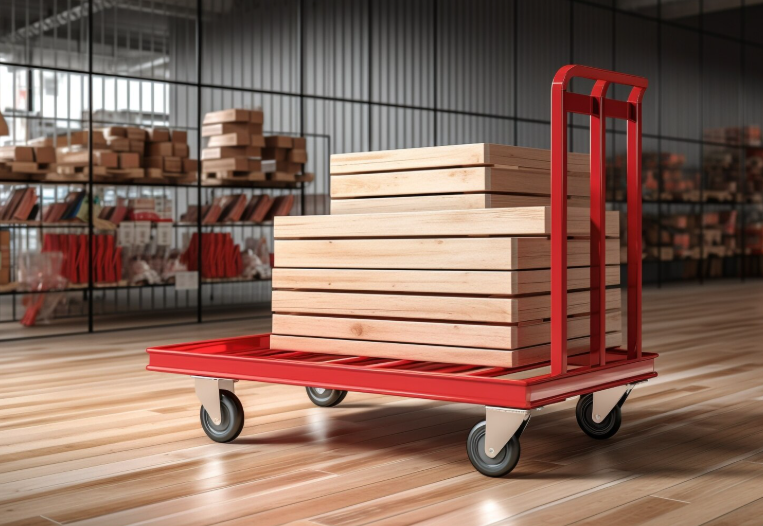
Industrial trolleys come in various designs to suit specific tasks. Platform trolleys are commonly used for transporting boxes and heavy cartons. Shelf trolleys allow for the organised movement of multiple items at once. Cage trolleys provide secure transport for loose goods.
Heavy-duty models are built with reinforced steel frames and high-capacity wheels to support substantial weight. Some are designed for specialised environments, such as stainless steel trolleys for food processing or anti-static models for electronic manufacturing.
Choosing the right type ensures the equipment matches operational requirements.
Durability in Demanding Environments
Factories and warehouses can be tough environments. Equipment is exposed to heavy loads, rough surfaces, and constant movement.
Industrial trolleys are built to withstand these conditions. Strong frames, quality welds, and durable wheels ensure long-term performance. High-grade materials reduce the risk of bending or structural failure under pressure.
Investing in well-made trolleys often proves more cost-effective over time. Cheap alternatives may require frequent replacement, leading to higher long-term expenses.
Supporting Organised Workspaces
An organised workspace improves efficiency and reduces errors. Industrial trolleys contribute to this by helping staff move items systematically rather than stacking them on floors or workbenches.
Shelf and tray trolleys can be used to keep tools and components organised during production processes. This prevents clutter and reduces the likelihood of misplaced items.
Clear pathways and proper storage also enhance workplace safety by lowering trip hazards.
Flexibility Compared to Larger Equipment
While forklifts and automated systems are essential for heavy pallet movement, they are not always practical for smaller tasks. Industrial trolleys provide a flexible alternative.
They can be used in narrow aisles where larger machines cannot operate easily. They are also quicker to deploy for short-distance tasks.
This flexibility makes them valuable for businesses that require both mobility and precision in daily operations.
Reducing Equipment Downtime
Reliability is important in industrial settings. Industrial trolleys require minimal maintenance compared to motorised equipment.
Regular wheel checks and basic inspections are often sufficient to keep them in working condition. Because they do not rely on fuel or complex electronics, they are less prone to unexpected breakdowns.
This simplicity contributes to an uninterrupted workflow.
Cost-Effective Operational Support
Industrial trolleys represent a relatively low investment compared to automated machinery. Yet their impact on efficiency and safety is significant.
For small to medium-sized businesses, they provide essential material handling support without large capital expenditure. Even large factories rely on trolleys to complement automated systems.
The return on investment comes through improved productivity, reduced injury risk, and enhanced organisation.
Adapting to Growing Business Needs
As businesses expand, material handling demands increase. Industrial trolleys can be added easily to meet growing workload requirements.
Unlike fixed infrastructure, they do not require structural changes or major installations. This makes scaling operations simpler and more flexible.
For companies looking to maintain operational agility, this adaptability is a major advantage.
Conclusion
Industrial trolleys are essential equipment for warehouses and factories because they support safe, efficient, and organised material handling. By reducing physical strain, improving productivity, and offering flexibility in tight spaces, they play a critical role in daily operations.
Durable, cost-effective, and adaptable, industrial trolleys remain a practical solution for businesses seeking reliable support in demanding environments. Whether used alongside automated systems or as standalone tools, they contribute to smoother workflows and safer workplaces.